
.png)
As We Rise Exhibit Reflections: Holding History, Honoring Self, and Imagining Futures
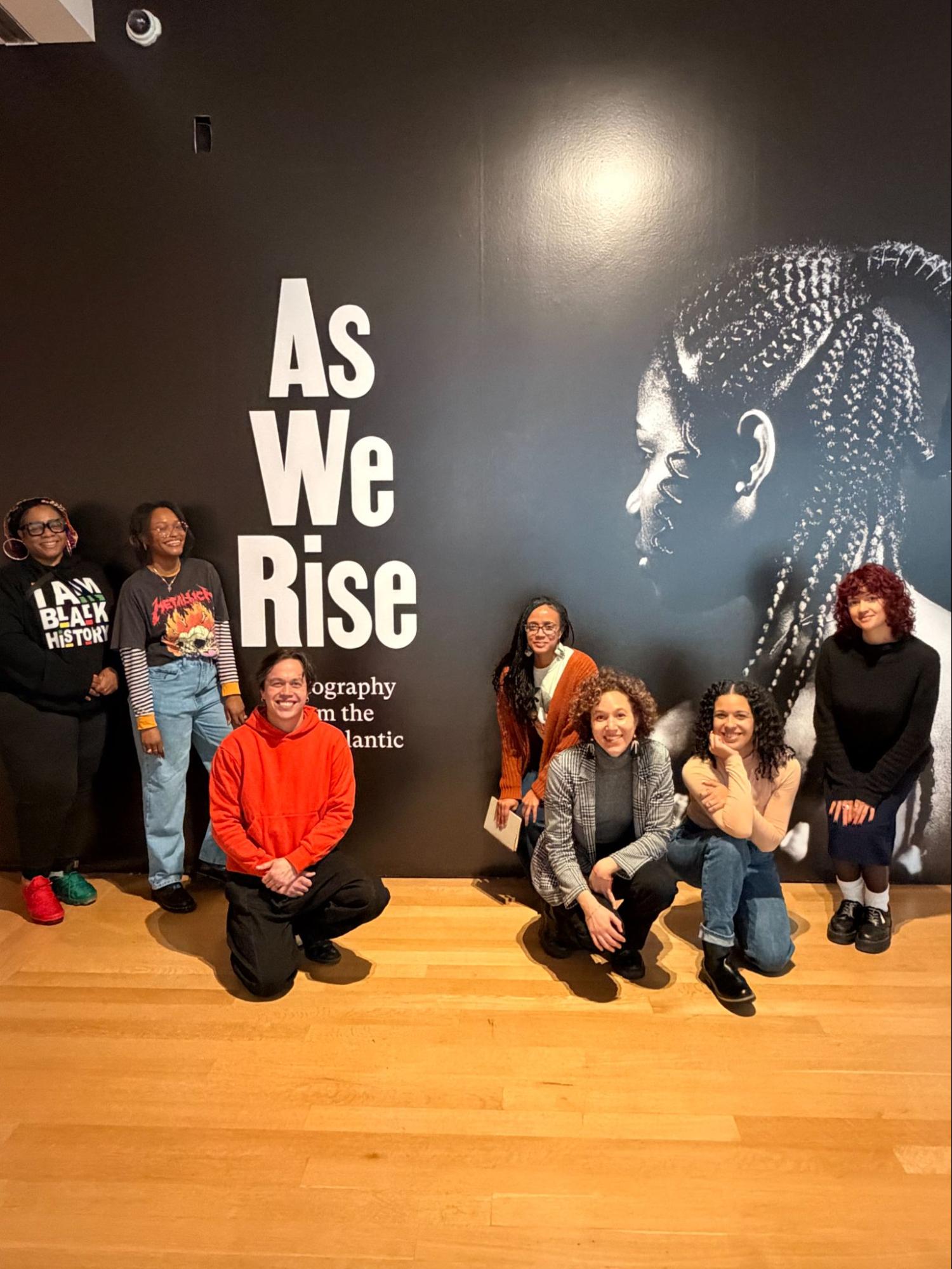
At the end of February, our team spent time at the As We Rise exhibit at the Grand Rapids Art Museum, not just as observers, but as participants in a living archive of Black history, identity, and imagination. The exhibit invited us into a space where art becomes relational, emotional, and deeply political. Through photography and mixed media, we were reminded that history is not something we simply look back on, but something we carry, shape, and feel in real time.
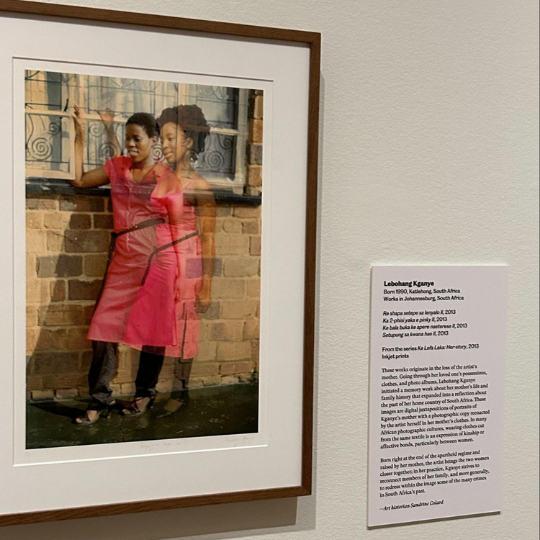
For octavia, the work of Lebohang Kganye opened a deeply personal reflection on ancestry and connection:
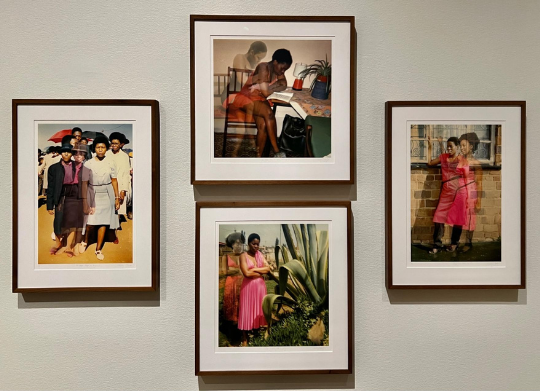
"This piece by Lebohang Kganye moved me in ways I wasn’t prepared for. Seeing the series together, off first glance felt like a time capsule. This series holds open a door for the viewer to climb into and connect with the subject, her mother and herself. Learning about her process to recreate this ghost like doubling connected me with a deeper understanding of the work, of her and her mother and of me and mine. It felt like she was almost an ancestor of hers, standing next to her so she is never alone but also an homage to seeing herself in her mother. Kganye’s piece pushed me to think further about this notion i’ve been walking myself through and that’s humanizing my mother– giving her space because this is her first time being a mother. It’s everyone’s first time. Every other person is just different version of yourself. We are not that far removed from our parents, our ancestors and even our descendants regardless of if they’re on the physical plane with us just yet."
Her reflection reminds us that cultural work is also internal work. We must think about how we understand ourselves in relation to those who came before us and those who will come after.
For Jessa, the exhibit challenged dominant narratives about history and storytelling, particularly through the work of Paul Anthony Smith:
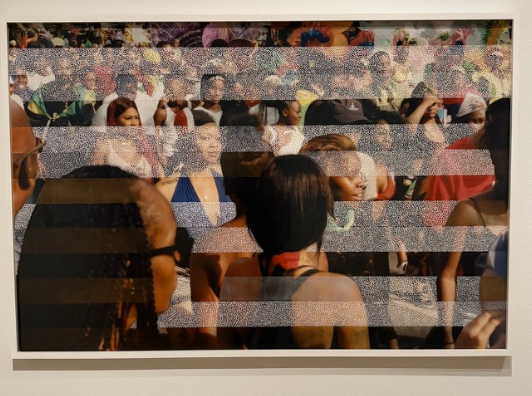
“Walking through the As We Rise exhibit was an emotional ride. The first piece that caught my eye was ‘Junction 3’ by Paul Anthony Smith. It was a photograph with added texture to illustrate the idea that, historically, photographs (and sharing them) have been tied to harmful colonial ideas. That set the tone of the entire experience for me: we aren’t here to see photographs of other places and times, but to be amongst Black history. Being in the exhibit put me in a dense cloud, and as I walked through this exhibit, I learned about the history and meanings of the images I saw. Every piece was connected and flowed through the themes of community, identity, and power. Each image invited me in to feel its captured moment. I left struck with the feeling that history is not linear, but rather a mosaic. People forget that history is many things: stories, feelings, and experiences, big and small, and that many of the most beautiful, emotional, personal, and communal historical events aren’t captured in a history book but in artwork.”
This speaks to the power of narrative and how we reclaim stories, name truth, and resist systems that attempt to flatten or erase lived experiences.
Lili’s experience brought forward the duality of joy and exhaustion that so many in our community carry:
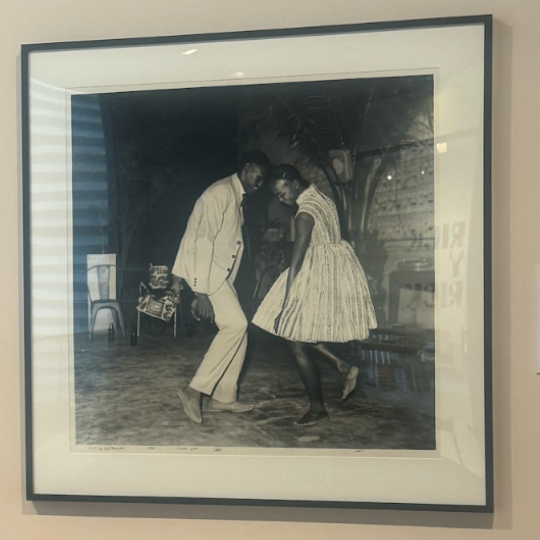
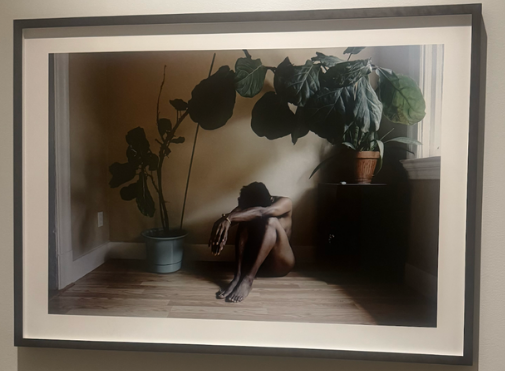
“The photo of the brother and sister dancing moved me. I have recently been leaning into dance as a way to find joy, my fun, even in hard seasons. Dancing with my partner, with my family, choosing joy intentionally, has become a form of resistance and connection for me. The second image of the person sitting alone, exhausted and defeated, also felt very real. In this current climate, with the many hats we wear in this community, as leaders, as heads of household, and as people of color, it is hard. Being married to a Black Latino man, raising children, carrying responsibility, some days it truly feels heavy. That image captures the exhaustion. Un poquito.”
Her words reflect a core truth in our work: that joy is not separate from struggle. Joy is a necessary, powerful response to struggle.
Another reflection brought us back to the responsibility we carry to remember and actively shape how we live, see, and build together. Alisha said:
"I left the “As We Rise” exhibit truly feeling like my heart was full. The exhibit reminded me of the joy, resilience, and community that was cultivated through generations. Oppressive systems attempt to define people by their oppression, but we are so much more! Our ancestors laughed, they danced, they rested, and they played. They were vulnerable, they were expressive, they were human. I’ve felt moved to lean into this more, to create more healing spaces of joy and authenticity where we can come together to fellowship and to just be. I was left reminded of the call we have to carry the torch of living and leaving a legacy while also bearing witness to what’s right in front of us. One of the pieces by Horace Ové shared advice that he followed throughout his career which was “train yourself to see”. This powerful statement resonated with me because it was a reminder to slow down and train ourselves to see what’s happening around us – to see the joy and the injustice, to see the laughter and the tears, to see the dancing and distress. We rise to tell our stories, to tell all of our stories, ensuring that not one is left out."
We found that the exhibit held space for both joy and pain, and for some of use, that experience was deeply emotional. Fredericka’s reflection grounded the experience in both grief and determination:
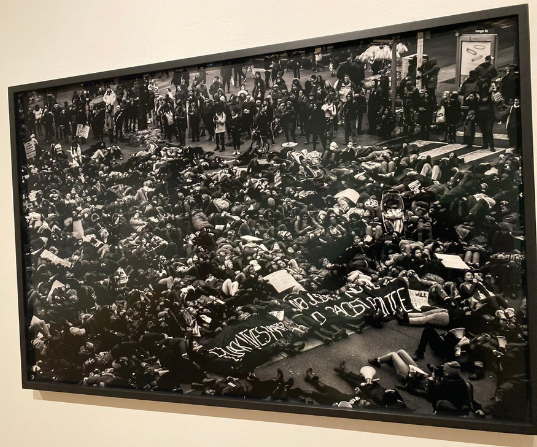
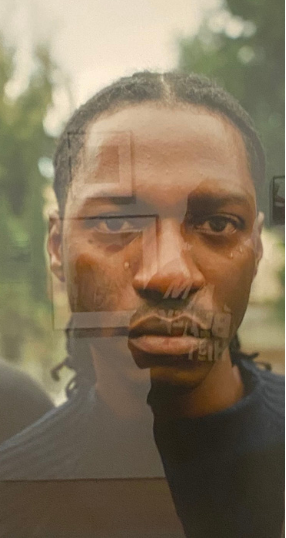
“The ‘As We Rise’ exhibit was very thought provoking for me. I was at see at how the photographers captured so many candid moments and memories. One image that really struck me was the ‘Black Lives Matter’ photograph. It brought me to tears… many many tears. I feel that it symbolized where we are as a nation at that time and currently and just how far we as a nation have to go. Another image was an image of a man with a single tear. This to me, symbolizes my empathy for my Black brothers and sisters. We are tired of fighting for liberties that we should all be afforded. Tired of the police brutality. Tired of these systems that support and add to our oppression. But!!! I also believe in Black Joy and Black Power and with that in mind... WE WILL RISE!!”
Her words call us back to collective action. We must name the harm and take time to grieve while also holding onto vision, power, and possibility.
Together, these reflections embody what it means to engage in cultural strategy. Our time at As We Rise was not just about witnessing art but about deepening our relationships with history, with each other, and with the futures we are actively building. We left the exhibit reminded that our work is rooted in these same principles: honoring lived experience, telling fuller stories, and building a world where all of us can rise, together.

.png)
.png)


